Because extraordinary care sees the extraordinary in everyone.
Everyone experiences dementia differently. We respond to the person in front of us — their history, their preferences, their day — so they stay connected and empowered to live their best life, with symptoms managed in a safe and supportive environment.
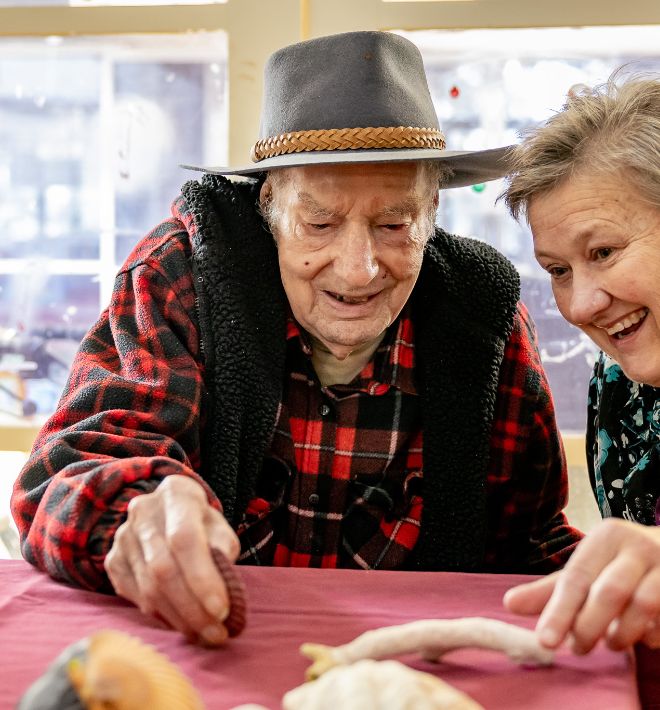
Specialised care for people living with dementia.
Dementia describes the symptoms of a large group of illnesses that cause a progressive decline in a person's functioning — memory recall, problem solving, language and communication. Although it most commonly affects older people, it is not a normal part of ageing.
Onset and progression are often unpredictable, with changes in mood and behaviour that can seem out of character. For many, that comes with real frustration at the loss of control. It matters that family members, carers and support workers understand the possible symptoms, so they can respond to what the person actually needs.
Early on
Slight changes in memory, personality or behaviour. A person may become less motivated to do things they once enjoyed, or feel insecure away from familiar surroundings and routines.
As it progresses
Changes become more noticeable to others, affecting concentration, understanding and reasoning. Confusion, disorientation and mood swings are common as everyday demands become overwhelming.
Care that meets the need.
Temporary respite, in-home support, and high-level care in our homes. Our staff consider each resident as a member of the community — their personality, learning preferences and life before now — and build a personalised behaviour support plan on the principles set out by Dementia Australia.
Moving in, well prepared.
The decision to move a loved one living with dementia into a residential home can be emotionally overwhelming. Being prepared, and understanding the options, makes it a little easier.
We aim to reduce or stabilise symptoms at all levels of dementia through specialist care planning — medication monitoring, exercise, diet and sensory-based activities. When residents first arrive, we ask families to complete a personal profile so staff know what their loved one enjoyed outside of care, and can support those activities wherever possible.
There's a tailored menu too, for residents who like to stay active and eat on the go — nourishing finger foods and snacks.
Memory support units.
Most people living with dementia live well in an aged care home. Where a diagnosis is severe, it may be right to consider a home-like memory support unit inside one of our homes — improved accessibility, safe access to outside spaces, and opportunities to connect socially.
Specialist mental health support.
Our high dependency units provide specialist, safe and respectful support where general residential care or a memory support unit can't meet a resident's needs — usually because of a long-term, persistent mental illness alongside the onset of dementia or another condition affecting independence.
These units operate under the guidance of the Mental Health Commission to ensure safe, dignified care.
Our specialist teams work to give residents a sense of possibility, helping them manage symptoms including loneliness and isolation. The goal for each resident is a sense of wellbeing and recovery that supports a move back into a general residential aged care home.
Where they are.
A break that helps both of you.
Caring for someone living with dementia can be rewarding and hard in the same week. Respite benefits the person and their carer. We offer two types: residential respite in our aged care homes, for a minimum of two weeks, and home-care-funded respite through respite cottages and day centres.
Residential respite is a chance for someone living with dementia to socialise and take part in meaningful activities, easing isolation and loneliness. For families and carers, it's time to look after their own wellbeing.
Guests in residential respite join everything permanent residents do — activities, dining, and 24/7 clinical support.
Good to know.
Extra support is available through Dementia Australia and Dementia Australia. Family and carer support groups run regularly across the Perth metro area — a good place to learn how to communicate with your loved one and to hear from families in the same position.
The same fees as any residential care.
Specialist dementia care in a residential setting is charged the same way as mainstream residential care. Everyone living in one of our homes — including dementia wings and high dependency units — contributes to the cost of their care and accommodation through a basic daily care fee and, if applicable, a means-tested care fee.
What you pay depends on the level of care and services needed, and on an assessment of income and assets. Respite costs vary with the type of care and the length of stay: people accessing respite in a residential home pay no accommodation or income-tested fees, just a set basic daily fee worked out as a percentage of the age pension.
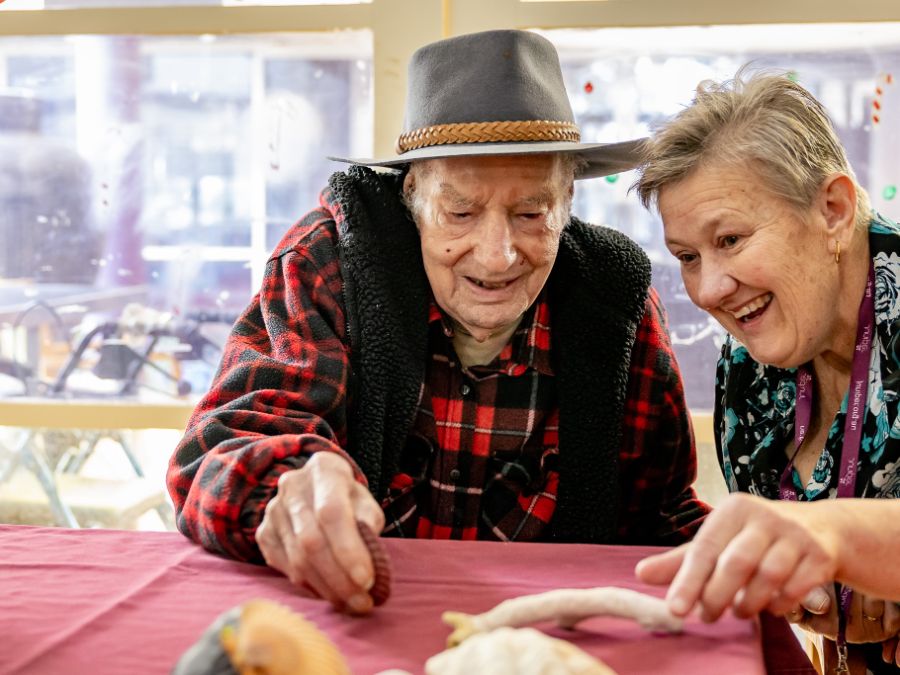
Start with an ACAT assessment.
Anyone seeking residential respite or permanent residential care — including dementia support in one of our homes — needs an assessment from an Aged Care Assessment Team.
- Call us or My Aged Care to start the referral for an assessment.
- An assessor visits, usually at home, to understand what help is needed.
- You receive an approval letter setting out the care you're eligible for.
- We help you choose a home, arrange a tour, and work through the paperwork.
Three days that make the road ahead clearer.
A small-group retreat for people in the early stages of dementia and their carers — separate education streams, a calm and accessible venue, and people who understand what you're going through. No ACAT assessment needed, just a short screening call.
- Three days, two nights, ten participants
- Separate sessions for carers and for people recently diagnosed
- Afternoons and evenings shared together
- Dementia-aware resort-style venue
- Perth metro and Broome dates
- Self-referral — no My Aged Care approval required
Tell us what's happening, and we'll help you plan.
Whether you're looking for respite, a memory support unit, or just someone to explain the next step — get in touch.